Pirate Flags & the Jolly Roger — History, Skull and Crossbones & Symbols
All About the Jolly Roger Pirate Flag
 Most pirates wanted to avoid bloody close-contact fighting when possible, so using pirate flags was an excellent way to wage psychological war from a distance — weakening an enemy’s resistance and forcing a quicker surrender. The Jolly Roger and its variants were among the most effective weapons in the entire Golden Age of Piracy arsenal. Read on to discover the history of the Jolly Roger pirate flag, the meaning of the skull and crossbones, and the stories behind the symbols.
See also: Pirate Flag Pictures
In this article: Jolly Roger origins / other pirate flags / pirate flag symbols
The Origin of the Jolly Roger Pirate Flag
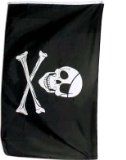
Jolly Roger Flag for Sale
Some say the Jolly Roger pirate flag got its name from the Jolie Rouge — an all-red flag used by early pirates to signal that no mercy, or “quarter,” would be given to those who resisted. Jolie Rouge in French means “pretty red,” a tongue-in-cheek name for a flag that promised anything but. Another plausible explanation is that “Old Roger” was a pirate nickname for the devil himself. Over time, the term Jolly Roger came to describe all the varied pirate flags of the Golden Age of Piracy.
Whatever the name’s true origin, Emmanuel Wynne is credited with flying the first Jolly Roger pirate flag around the year 1700 — a skull and crossbones on a black field with an hourglass beneath it, signaling that time to surrender was running out.
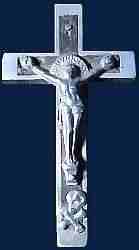
The skull and crossbones symbol so central to pirate flag history may have been inspired by tombstone carvings, but another possible origin is the crucifix. In the 17th century, crucifixes almost always depicted a skull and crossed bones beneath the cross — symbols of the death that Christ was said to have conquered. These also referred to Golgotha, the hill of the crucifixion, whose name in Greek means “the skull.”
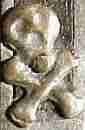
This skull and crossbones imagery fell out of favor in the 1800s as the pirate flag association became increasingly dominant. Another documented source for the skull was the ship’s log: the symbol was placed next to a crew member’s name when they died during a voyage.
Popular culture and Hollywood have made it hard to recover the full truth about the most iconic of pirate flag symbols. The key historical fact: the skull and crossbones Jolly Roger pirate flag was only in active use for roughly 20 years, at the height of the Golden Age of Piracy — and in that brief window it became one of the most recognizable symbols in history.
Other Types of Pirate Flags
National Flags & False Flag Tactics
Since medieval times, ships flew their national flag as identification. Some pirates had no personal Jolly Roger and flew only their homeland’s flag — as the Caribbean buccaneers were known to do. When a pirate held a letter of marque or privateering commission, they were required to fly the flag of the commissioning nation.
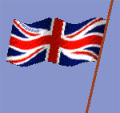

A common ruse de guerre — strategy of war — was for pirates to fly the same flag as their target, allowing them to approach under false pretenses. Once close enough, they would run up the Jolly Roger to demand surrender. This pirate false flag tactic was one of the most practical uses of a flag as a weapon.
Pirate Flag Colors & Their Meanings
Solid-colored pirate flags were in use before the skull and crossbones era of the Jolly Roger. Each pirate flag color carried a specific, widely understood meaning:
Black — The original symbol of death at sea. A solid black pirate flag was raised when an engagement was imminent: surrender now, and you may be spared.
White — Paradoxically, the white pirate flag did not signal surrender by the pirates — it demanded it from the prey. “You must surrender,” was its message.
Red — The most feared pirate flag color. The red flag — the original Jolie Rouge — meant no quarter: no mercy would be shown regardless of what the enemy did. Ironically, the no-quarter red pirate flag sometimes backfired by inspiring desperate resistance, since victims facing certain death had nothing to lose by fighting to the end.
Pirate Flag Symbols: Skull and Crossbones Meaning & More
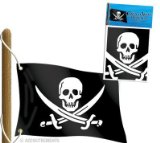
To maximize the psychological impact of their pirate flags, Golden Age pirates began adding morbid symbols drawn from graveyards and death imagery. Emmanuel Wynne is credited as the innovator: his skull and crossbones over an hourglass sent a clear message that the time to surrender was running out. From there, pirate flag symbolism grew increasingly elaborate:
- A pierced heart — merciless death...
- A heart with drops of blood — a drawn-out, painful death...
- A dart or spear — violent death...
- A skeleton — a tormented death...
- A cutlass in a hand or an empty fist — any and all of the above, available free of charge and without delay.
Blackbeard Flag for Sale
Blackbeard’s Pirate Flag
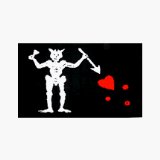
Blackbeard’s famous pirate flag brought together nearly every element of skull and crossbones symbolism: a horned, muscular skeleton holding an hourglass in one hand and a spear in the other, pointing at a heart letting out three drops of blood. It was the most elaborate and terrifying pirate flag of the Golden Age — designed, like everything about Blackbeard, for maximum psychological effect.
(Blackbeard later wrote in his journal that some had suggested the skeleton should have scary tattoos, a black leather jacket, and a Harley to ride — but he felt that was overkill.)